The honest answer first: on most Florida re-roofs you are looking at a tear off, not a metal roof laid over the existing shingles. The Florida Building Code does not ban a metal recover outright, and it names standing seam by profile in an exception. But the conditions attached to that exception, and the deck work a full replacement triggers, mean that on the large majority of the jobs we quote from Jacksonville to Miami the shingles come off. That is the answer whether or not it is the one the homeowner wanted.
The 25 Percent Rule, Quoted
Reroofing in Florida is governed by FBC Existing Building Section 706, with parallel text in FBC-Building 1511.1.1 and FBC-Residential R908.1.1. All three carry the same sentence:
Not more than 25 percent of the total roof area or roof section of any existing building or structure shall be repaired, replaced or recovered in any 12-month period unless the roof covering on the entire existing roof system or roof section is replaced or recovered to conform to the requirements of this code.
In plain terms: touch more than a quarter of a roof section in a rolling twelve months and the whole section has to be brought up to the code in effect. That is the rule everyone remembers. It is not the rule that decides most jobs.
The 2007 Exception Is What Actually Decides Most Jobs
The exception attached to the same section is the part that gets left out of most articles:
If an existing roofing system or roof section was built, repaired, or replaced in compliance with the requirements of the 2007 Florida Building Code, or any subsequent editions of the Florida Building Code, and 25 percent or more of such roofing system or roof section is being repaired, replaced, or recovered, only the repaired, replaced, or recovered portion is required to be constructed in accordance with the Florida Building Code in effect, as applicable.
The practical date is March 1, 2009, when the 2007 Florida Building Code took effect. If the roof section in front of you was built, repaired or replaced under that edition or a later one, only the portion you are working on has to meet current code.
Its statutory home is F.S. 553.844(5), created by SB 4-D in 2022 (ch. 2022-269, effective May 26, 2022) and not amended since. The code text says it directly: a local government may not adopt by ordinance an administrative or technical amendment to this exception. It applies to "any existing building or structure," not only single-family homes. What it does not do is exempt you from proving it, and a building department is entitled to ask for the permit history before it takes your word for the age of a roof section.
What the Code Says About Recovering Versus Replacement
FBC-EB 706.3 and FBC-B 1511.3 list the conditions under which every existing layer has to come off down to the deck before anything new goes on. There are five:
- The existing roof or roof covering is water soaked, or has deteriorated to the point that it is not an adequate base for additional roofing.
- The existing roof covering is wood shake, slate, clay, cement or asbestos-cement tile.
- The existing roof already has two or more applications of any type of roof covering.
- Blisters exist in any roofing, unless they are cut or scraped open and the remaining material is secured down first.
- The existing roof covering is to be used for attachment of the new system and the securement provisions of FBC-B 1504.1 cannot be met.
Then comes the exception a lot of metal roofing copy quotes without the rest of the sentence:
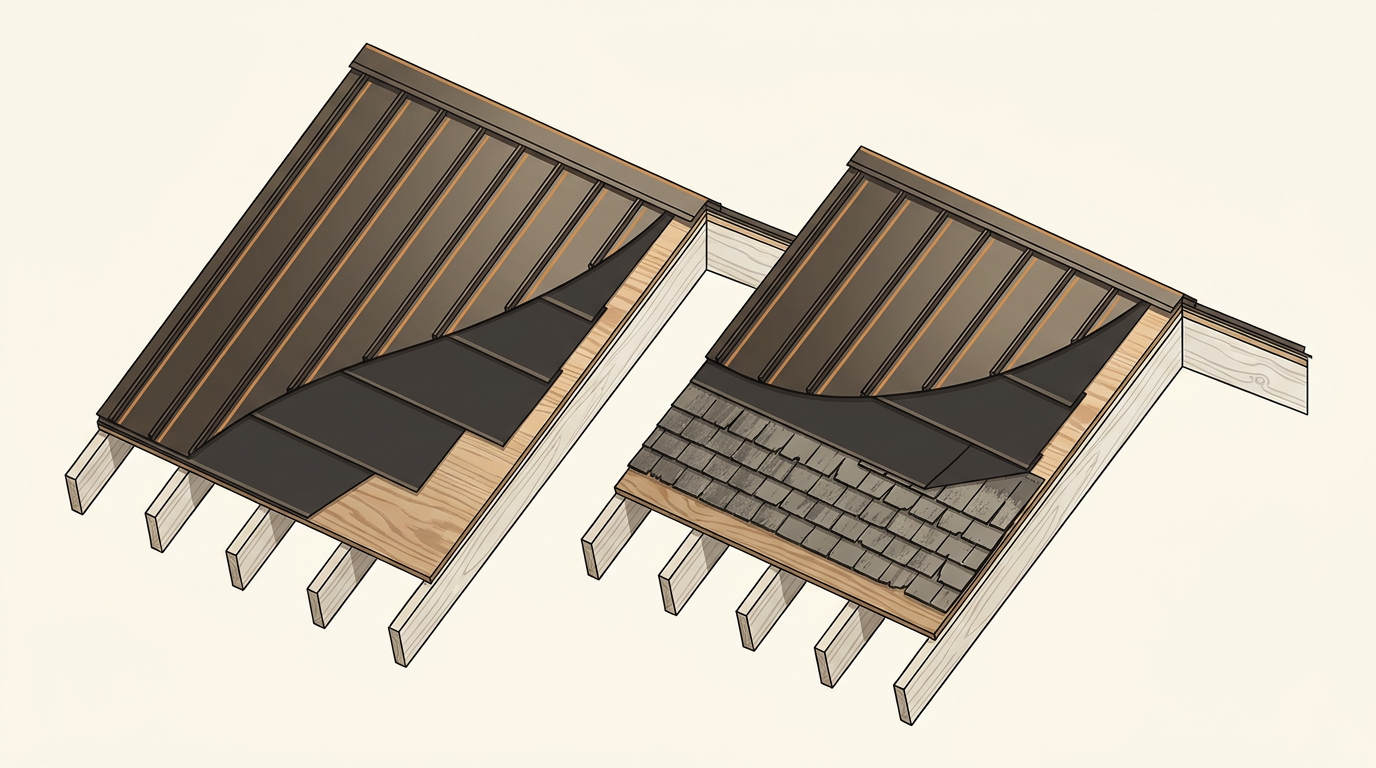
Complete and separate roofing systems, such as standing-seam metal roof systems, that are designed to transmit the roof loads directly to the building's structural system and that do not rely on existing roofs and roof coverings for support, shall not require the removal of existing roof coverings.
So a metal recover is not automatically illegal outside the High Velocity Hurricane Zone. It is conditional. One existing layer only, a deck and covering that are sound, and a metal system that carries its loads to the structure rather than leaning on the shingles underneath it. Those conditions are the building official's to judge, and the exception relieves you of nothing else in Chapter 15.
What a Tear Off Triggers That a Recover Does Not
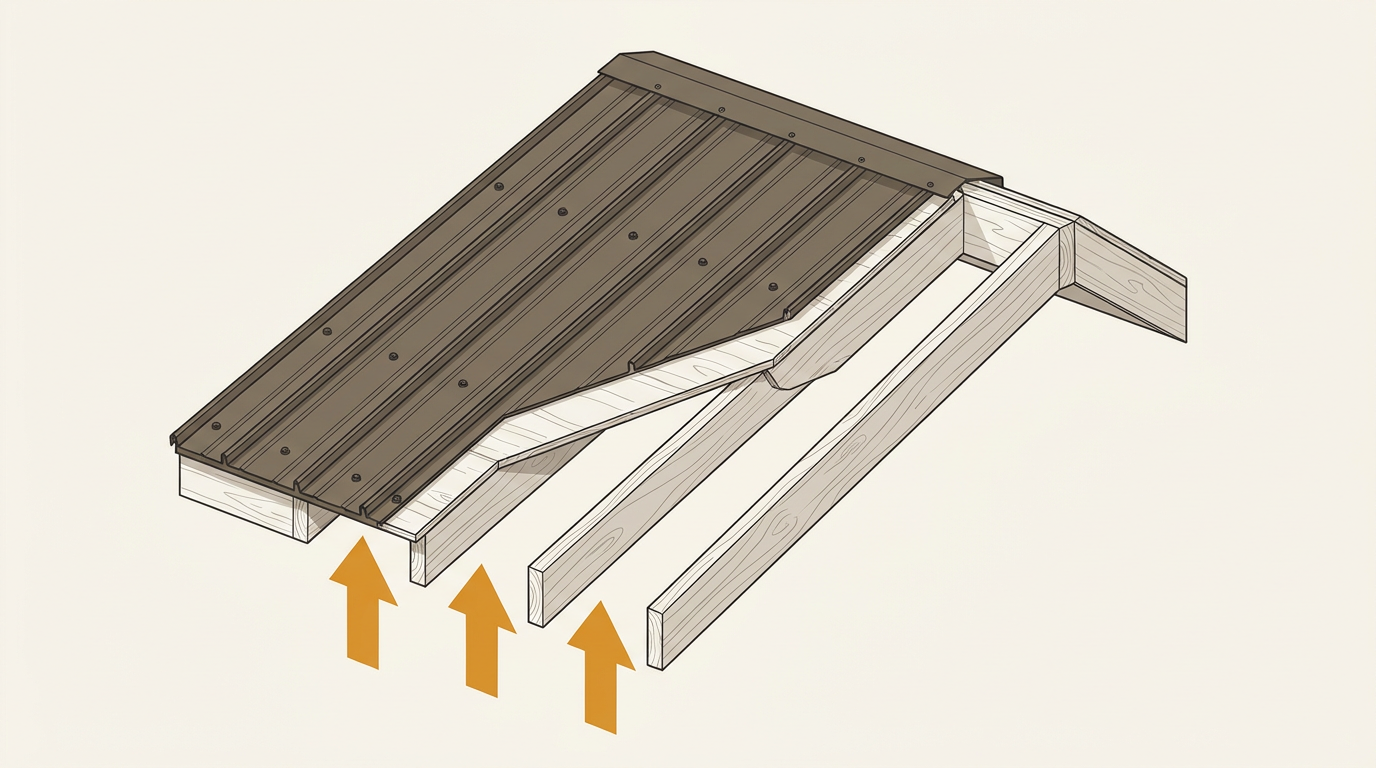
This is where the economics usually settle the argument. FBC-EB 706.7 attaches two mitigation items to the removal and replacement of a roof covering on a structure with a sawn lumber, wood plank or wood structural panel deck:
- Roof deck attachment, under 706.7.1. The section defines an existing 8d nail as a minimum 0.113 inch in diameter and a minimum 2-1/4 inches long, and Table 706.7.1.2 sets supplemental fastener spacing where the existing nailing does not qualify. Read the table and the local handout rather than a rule of thumb.
- A secondary water barrier, under 706.7.2, installed per FBC-B 1507.1.1 or 1518.2, or FBC-R R905.1.1.
The section carries its own exception: structures permitted subject to the Florida Building Code are not required to comply with 706.7. That is a meaningful qualifier and it is worth checking before you price the retrofit into a job.
A recover triggers neither, because nothing was removed. That is not the bargain it looks like. Deck attachment and a sealed roof deck are two of the specific features a wind mitigation inspection documents, and a recover leaves both exactly where they were. We will not publish a discount figure against that, because credits come out of each insurer's own filed rates. But the tradeoff is real and it belongs in the conversation with the owner.
Two Corrections Worth Making
The secondary water barrier is not triggered by a wind speed. 706.7.2 reads "When a roof covering is removed and replaced, a secondary water barrier shall be installed." There is no mph threshold in it. The trigger is a removal and replacement over a wood deck, statewide. Slopes under 2:12 with a continuous roof system are deemed to comply, and so are code-compliant clay and concrete tile systems. The 140 mph figure attached to this in most blog posts defines the wind-borne debris region, which gates a different requirement.
The 15 percent cost cap is on roof-to-wall connections, not deck nailing. FBC-EB 706.8 and F.S. 553.844(2)(b)3. put improved roof-to-wall connections on a site-built single-family residence in the wind-borne debris region with an insured value, or a just valuation for ad valorem purposes, of $300,000 or more, when the covering is removed and replaced. That is where "mandated retrofits of the roof-to-wall connection shall not be required beyond a 15 percent increase in the cost of reroofing" lives. It does not cap deck re-nailing.
Inside the HVHZ, Plan on a Tear Off
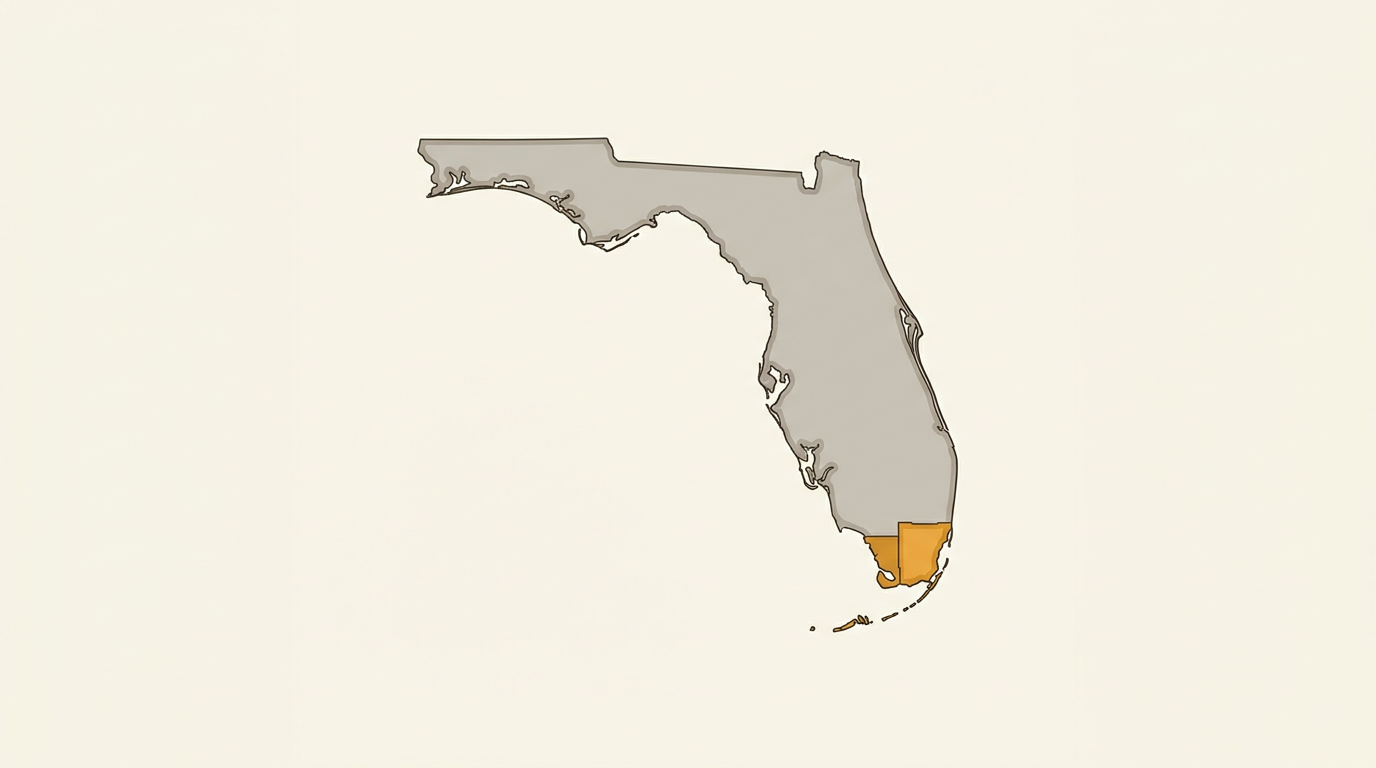
Broward and Miami-Dade are the High Velocity Hurricane Zone, both counties in their entirety. FBC-EB 706.3 hands them off to FBC-B Sections 1512 through 1525, where the reroofing rules are stricter in ways that matter here.
1521.5 prohibits applying a roofing system over an existing roof or deck where the sheathing has not been fastened in compliance with the code, where the sheathing will not permit effective fastening, or where it is water soaked or deteriorated. Deteriorated sheathing has to be removed and replaced. 1521.16 bars a recover over existing wood shingles, shakes, slate, tile or metal shingles outright. And the Owner's Notification required by 1524 says the quiet part in the code text itself: the roof deck is usually concealed prior to removing the existing roof system.
That is the practical problem. The HVHZ Uniform Permit Application under 1525 asks you to state the deck type, and 1521.5 asks you to certify a fastening condition. You cannot honestly certify a deck you have not looked at. On a Miami or Fort Lauderdale reroof, that alone usually settles it.
Where We Land on Metal Over Shingles
Even where the recover path is open, we push back on it, and we would rather say why than be vague.
Every ERS standing seam approval states the substrate it was tested on. The clipped profiles, SL150 among them, list a minimum 15/32 inch plywood deck with the clip fastened directly to it. A compressible layer of asphalt shingles between the fastener and the plywood is not the assembly that was tested, and the load table you are relying on came from that assembly. Beyond the paperwork, a shingle course telegraphs through a flat pan and anything that traps moisture against a Florida deck is a bad idea on a long enough timeline.
We would rather be blunt about it than lose a job at plan review. If a recover is genuinely right on a particular building, it needs to be engineered as one, with the approval and the AHJ agreeing in advance.
What To Do Before You Quote It
- Pull the permit history for the roof section. The 2007 code exception is worthless if you cannot show when the section was last permitted.
- Get the deck condition documented in writing before you commit to a price. On a recover you are betting the job on a surface you did not open.
- Confirm which side of the HVHZ line the address is on. Palm Beach County is not in the HVHZ; Broward and Miami-Dade are, in full.
- Pull the Florida Product Approval for the exact panel, gauge and substrate and read the tested assembly. Verify the current revision at floridabuilding.org before submittal.
- Ask the local building department how it treats a metal recover before you write the proposal.
Once the tear off question is settled the rest is ordinary work: pick the profile, size the underlayment for a Florida deck, and get the load numbers right. Our companion posts on wind uplift testing and design pressure and what to expect from a Florida metal roof permit cover the next two steps. When you are ready to price panels, Instant Metal Quote builds the material list, and sales can pull the approval documents for the submittal.