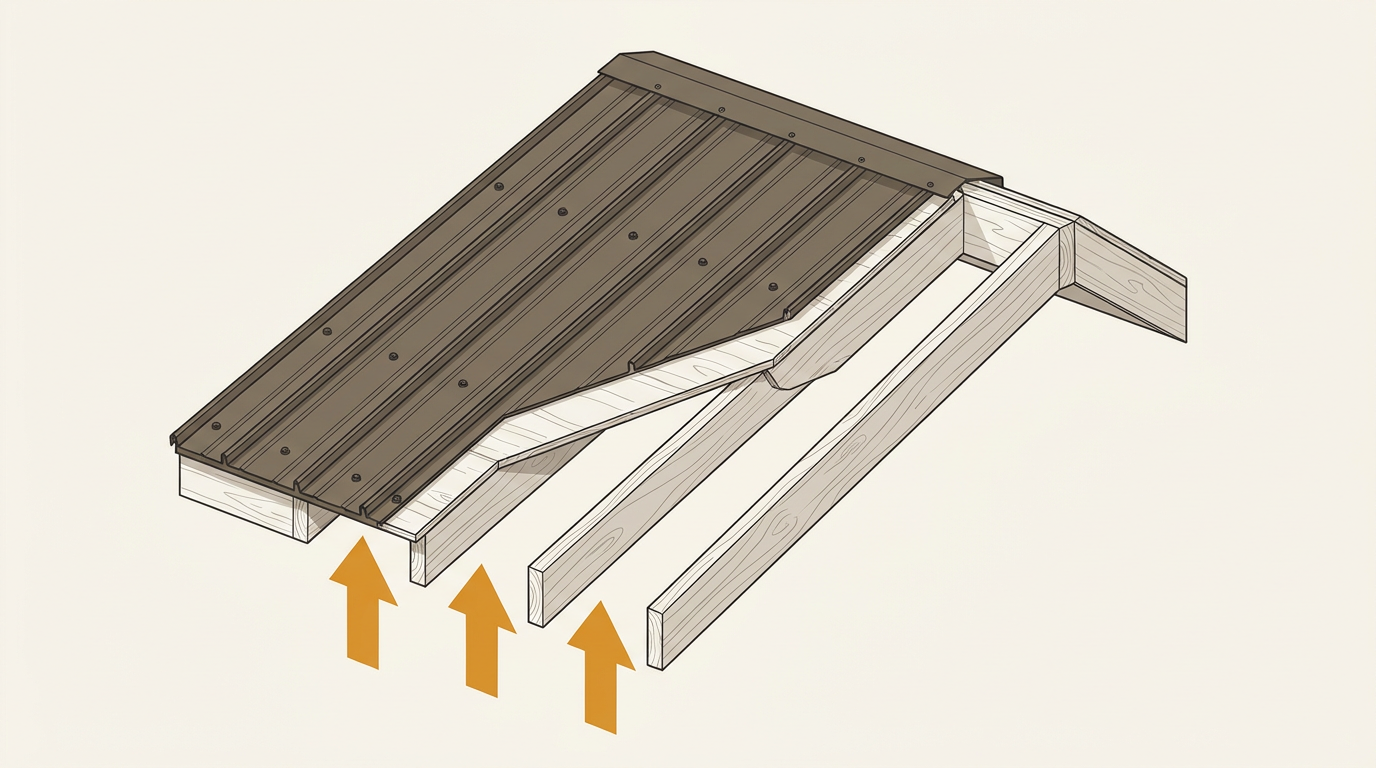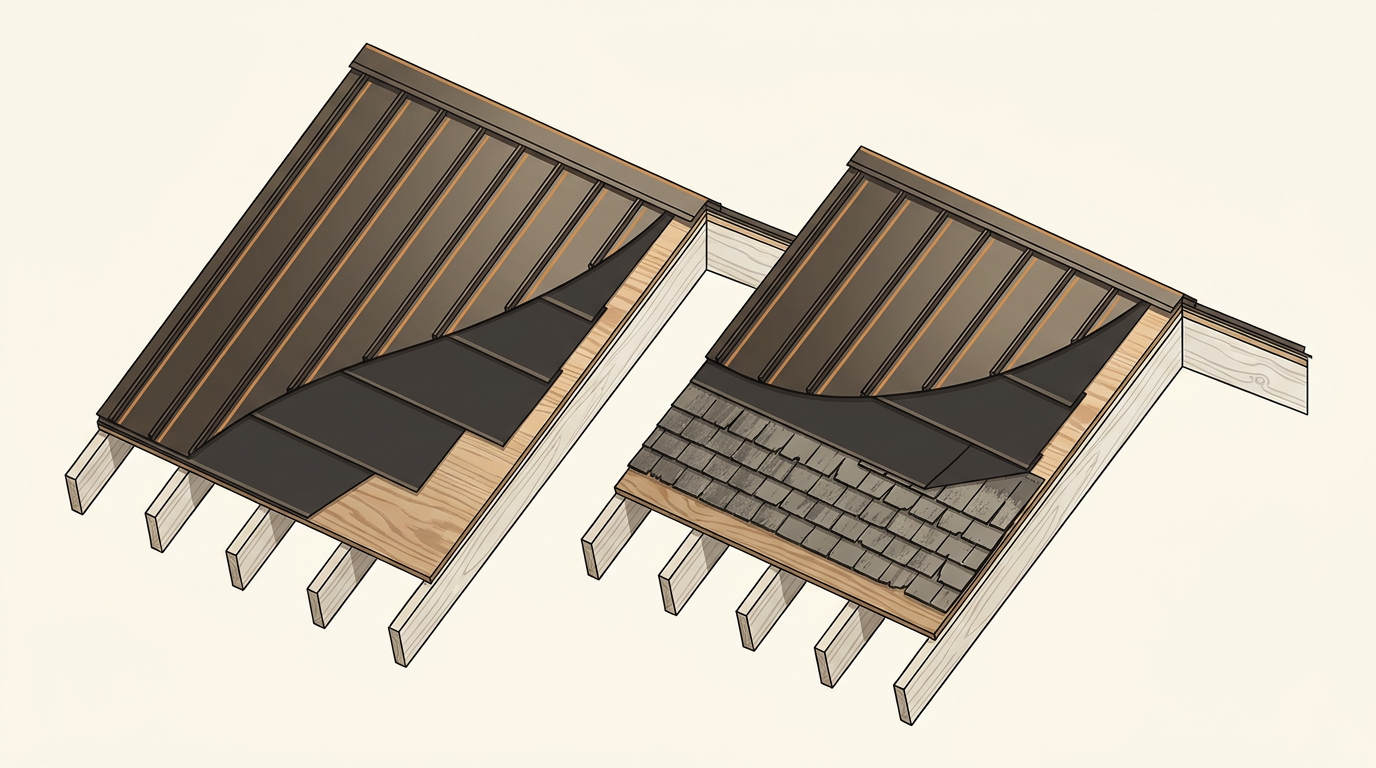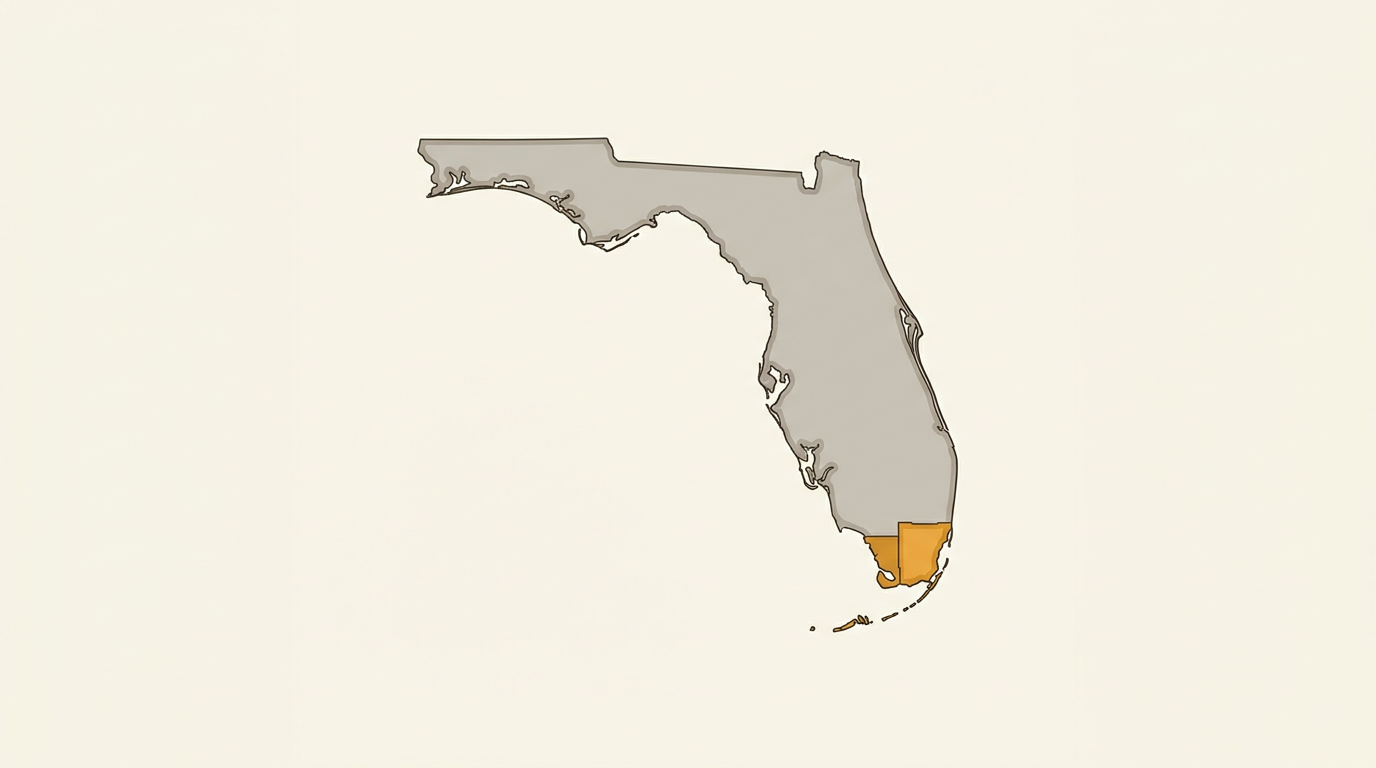
A Florida metal roof needs a permit, the documentation that travels with the application is mostly the panel's Florida Product Approval, and the exact checklist is set by the local building department rather than by the state. What follows is the detail: what the code requires, what the High Velocity Hurricane Zone adds, and what gets a metal roof application kicked back. We will not publish fee ranges or turnaround times, because they are set locally and a number invented for a blog post is worse than no number.
Yes, you need a permit
The requirement sits in F.S. 553.79(1)(a): it is unlawful to construct, erect, alter, modify, repair or demolish any building in Florida without first obtaining a permit from the appropriate enforcing agency.
There is a 2026 wrinkle worth knowing, because it is being misread. CS/CS/HB 803 (2026), chapter 2026-63, effective July 1, 2026, requires local governments to exempt an owner of a single-family dwelling, or that owner's contractor, from obtaining a building permit for work valued at less than $7,500 on the owner's property. Read the next sentence of the bill before you plan around it. The exemption does not apply to work on a property partially or entirely in a flood hazard area as defined by the Florida Building Code, and it does not apply to any electrical, plumbing, structural, mechanical or gas work performed on property containing a single-family dwelling. A project may not be divided into more than one project to evade the requirement.
Whether a given roof job falls inside or outside that structural exclusion is the building official's call, not the contractor's. In practice a Florida re-roof is permitted work, and treating a $7,500 exemption as a way around a roofing permit is how licensed contractors get into trouble. Pull the permit.
What travels with the application
The core of a metal roof submittal is the product documentation, and it is specific. A Florida Product Approval carries an FL number in the format FL#####-R#, where R is the revision, and it identifies the manufacturer, the quality assurance agency, the category and subcategory, the Florida Building Code edition it was evaluated against, the code sections addressed, and the referenced test reports. Pull the current revision from the public search at floridabuilding.org rather than reusing a PDF from a job two years ago.
Expect to submit, at minimum:
- The approval pages for the exact panel, gauge and substrate: front page, the specific system description, the specific system limitations, the general limitations, and the applicable detail drawings.
- The manufacturer's installation instructions for that system.
- Design calculations establishing the required uplift pressures for the roof zones, prepared under Chapter 16.
- Approval documents for the other components in the assembly, underlayment included.
- The deck type and, on a re-roof, whatever the department wants to see about deck condition and re-nailing.
If a Miami-Dade Notice of Acceptance is part of the package, note the jobsite obligation printed on the NOA itself: a copy of the entire NOA shall be provided to the user by the manufacturer or its distributors and shall be available for inspection at the job site at the request of the Building Official. That is a document that lives in the truck, not in an email.
The HVHZ Uniform Permit Application
Broward and Miami-Dade are the High Velocity Hurricane Zone, both counties in their entirety, and they have the closest thing Florida has to a statewide template. FBC-Building Section 1525 reproduces the HVHZ Uniform Permit Application form. For Metal Roofs it calls for sections A, B and D of the form, with attachments 1 through 7:
- Fire Directory Listing Page.
- From the Product Approval: front page, specific system description, specific system limitations, general limitations, applicable detail drawings.
- Design calculations per Chapter 16, or where applicable RAS 127 or RAS 128.
- Other component of Product Approval.
- Municipal permit application.
- Owners Notification for Roofing Considerations, reroofing only.
- Any required roof testing or calculation documentation.
Section D is the steep sloped roof system page, and it is the one that catches people out. It asks for the roof system manufacturer, the Notice of Acceptance number, minimum design wind pressures for Zone 1, Zone 2 and Zone 3, deck type, type of underlayment, insulation, fire barrier, fastener type and spacing, adhesive type, type of cap sheet, roof covering, type and size of drip edge, roof slope, ridge ventilation, and mean roof height.
Use that list as a checklist even outside the HVHZ. Every line is a question a plans examiner anywhere in Florida might reasonably ask, and the two that come back most often are the design pressures by zone and the fastener type and spacing, because both have to match a tested method in the approval rather than a jobsite habit.
The owner's notification, FBC 1524
On an HVHZ re-roof the contractor also has to provide the owner with the required roofing permit and explain the content of FBC Section 1524, the Required Owner's Notification for Roofing Considerations. The owner initials each item to show it was explained.
The item that matters most on a metal job is renailing wood decks. The code's own wording is worth quoting to an owner before the crew arrives: when replacing roofing, the existing wood roof deck may have to be renailed in accordance with the current provisions of Chapter 16, and the roof deck is usually concealed prior to removing the existing roof system. That is the reason a re-roof price can move after tear off, and having it initialed beats arguing later. Other items cover exposed open-beam ceilings where nail penetrations show from below, and overflow scuppers where perimeter walls block drainage.
Outside the HVHZ there is no statewide checklist
We looked for one and it does not exist. Outside Broward and Miami-Dade, each local building department sets its own submittal requirements, its own fee schedule, its own inspection card and its own review sequence. A Duval County package and a Lee County package are not the same package.
What is uniform is the product approval regime itself. F.S. 553.842 and F.A.C. 61G20-3 make roofing products an approvable category statewide, and a statewide approval is valid everywhere in Florida, including the HVHZ, when the approval is marked as approved for HVHZ use. A local building official may deny local use of a statewide approved product only by written report concluding that the application is inconsistent with the statewide approval, and that denial is appealable under s. 553.77.
So the practical move is unglamorous: call the department that will issue the permit, ask what it wants in the package, and ask before you promise the owner a schedule.
The statutory clock on a permit decision
Florida does set decision deadlines, and HB 803 tightened them. F.S. 553.792(1)(a), as amended effective July 1, 2026, requires a local government to approve, approve with conditions, or deny a building permit application after receipt of a completed and sufficient application within specified timeframes unless the applicant waives them in writing. The new first tier is 5 business days for an applicant using a local government plans reviewer to obtain a permit for an existing single-family residential dwelling where the value of the work is less than $15,000, and roofing is one of the named permit types. The existing tier of 30 business days applies where the structure is less than 7,500 square feet.
Two cautions. This is a clock on the department's decision, not a prediction of how long your job takes, and it only starts on a complete and sufficient application. An incomplete package resets the conversation. Second, none of this speaks to fees, which are set locally.
Sequencing and inspections
The shape of the job is consistent even though the inspection cards are not.
- Submit the application with the approval package and the calculations. Get it approved before anything is torn off.
- Tear off, and open up the deck. Deteriorated sheathing gets removed and replaced. In the HVHZ, FBC 1521.5 prohibits roofing over a deck whose sheathing is not fastened in compliance with the code, and it also states the building official is not required to inspect renailing performed under that section, so do not assume an inspection will catch a mistake for you.
- Dry in. Many departments want eyes on the deck and the underlayment before panel covers them, so confirm whether yours does before the crew closes it up.
- Install the panel to the tested method in the approval: the clip or fastener, the spacing, the substrate that was tested.
- Final inspection, with the approval documents available on site.
What gets a metal roof application kicked back
- An approval evaluated against a superseded code edition. The current Florida Building Code is the 8th Edition (2023), effective December 31, 2023.
- A panel submitted into the HVHZ that does not hold HVHZ approval. In our catalog that is NS100 in either gauge, 5V crimp, rib panel, and 26 gauge PBR. The SL100, SL150, NS150, M100 and M150 profiles and 24 gauge PBR do hold it.
- Design pressures missing for Zone 1, Zone 2 and Zone 3.
- Fastener type or spacing that does not match a tested method in the approval.
- A substrate on the drawings that is not the substrate the approval was tested on.
- Installation instructions left out of the package.
Most of those are avoidable at the desk. Our Florida Product Approval and installation instruction documents and the product sheets are on the site for exactly this reason, and every sheet states the approval number and the HVHZ status together, because stating one without the other is how a package gets built on a false assumption. Verify the current revision at floridabuilding.org before submittal.
If you are still deciding whether the job is a tear off, start with what the code allows over existing shingles. If you are working out the numbers that go in the design pressure boxes, read how a panel earns a design pressure. When the profile is settled, Instant Metal Quote will price the panels and trim, and sales can send the approval package for a specific address and panel.