A Florida Product Approval answers one question: has this specific roof assembly been tested and evaluated against the Florida Building Code, and by whom. It carries a number in the form FL#####-R#, where the R is the revision. A plans examiner looks it up, reads the tested assembly off it, and compares that to what you drew. When the two do not agree, the permit stops there.
The current code is the Florida Building Code, 8th Edition (2023), effective December 31, 2023. Every approval in your submittal should have been evaluated against that edition. One still riding on a superseded edition is the first thing a careful examiner catches.
What an FL number is and where it comes from
Statewide product approval is created by Florida Statute 553.842 and administered under Florida Administrative Code rule 61G20-3, which lists roofing products as an approvable category. The public search sits at floridabuilding.org/pr/pr_app_srch.aspx and it is free. Anyone can look up any number, which is why nobody should take an approval claim on faith, including ours.
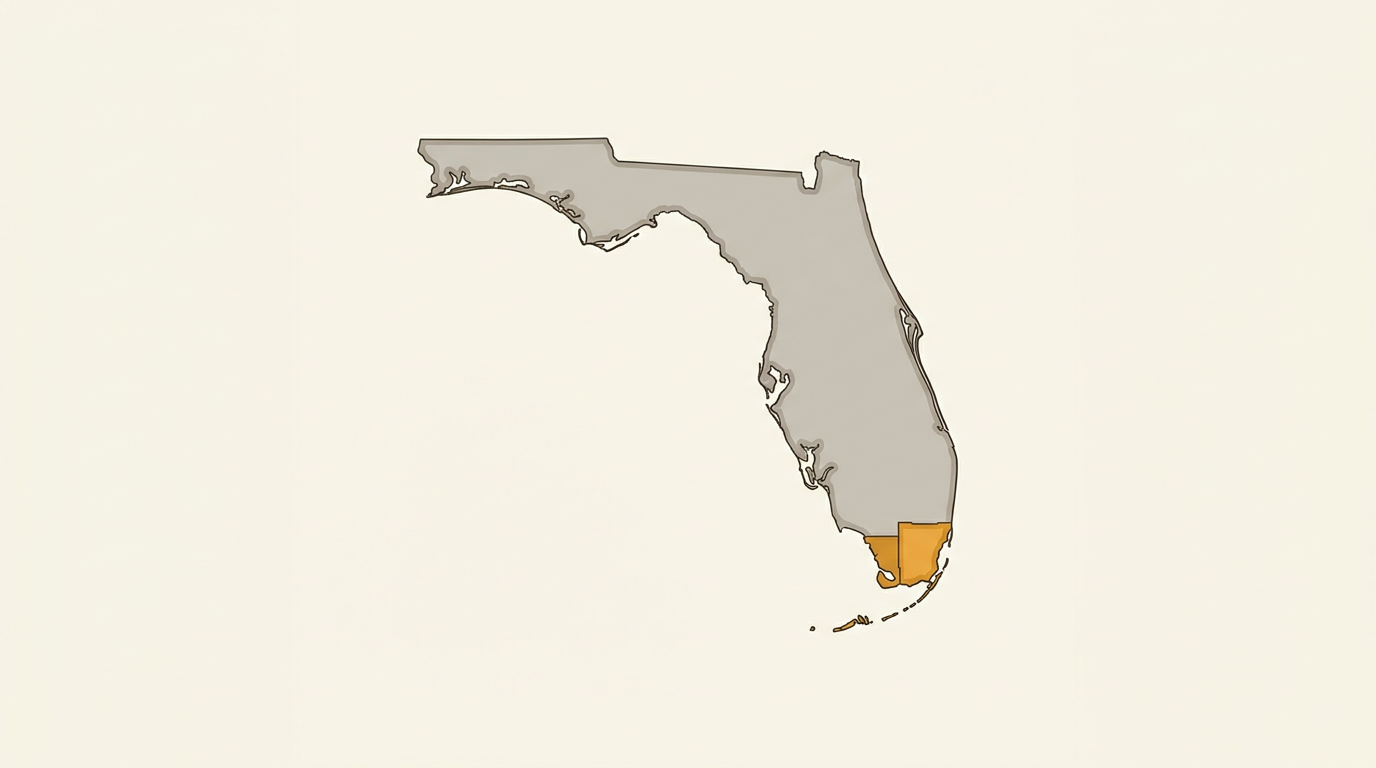
A real listing shows the manufacturer, the quality assurance agency, the category and subcategory, the FBC edition the product was evaluated against, the code sections addressed, and the referenced test reports. It also carries two flags that settle most Florida arguments before they start: approved for use in the HVHZ, yes or no, and approved for use outside the HVHZ, yes or no.
Those two flags are the whole game. A product with a valid FL number is not automatically usable everywhere in Florida. It is usable where its own flags say it is, and nowhere else.
The Miami-Dade NOA, and the five year fact that kills a common myth
A Notice of Acceptance is a local approval issued by Miami-Dade County RER Product Control. The language on a live NOA is explicit about its own scope: it is issued for use in Miami-Dade County and in other areas where the Authority Having Jurisdiction allows it. An NOA is a Miami-Dade document that other jurisdictions may choose to accept at their own discretion.
An NOA runs for five years, not one. A great deal of Florida roofing content on the internet says NOAs expire annually and have to be renewed every year. That is false. The NOA we read to check this carries an approval date of December 1, 2022 and an expiration of December 1, 2027. Five years. If a blog or a sales rep tells you otherwise, they have not opened one.
Two more claims worth throwing out, both common and both wrong:
- "You always need an NOA in Miami." No. A statewide FL approval that is marked approved for HVHZ use is valid in Miami-Dade and Broward on its own terms.
- "A statewide approval is never good enough for Miami." Also no. It is the same error stated backwards.
The two systems are not rivals. Miami-Dade Product Control is itself a statutorily approved evaluation entity under section 553.842(8)(a), so a manufacturer can use an NOA as the technical basis for a statewide FL approval. That is a normal path, not a loophole.
One more thing worth knowing at the counter. Under section 553.842(9) a building official may deny local use of a statewide approved product only by written report concluding that the application is inconsistent with the statewide approval, and that denial is appealable under section 553.77. A verbal "we do not take that here" is not the process the statute describes.
What the approval covers is the assembly, not the coil
This is where jobs go wrong. An approval does not bless a panel profile in the abstract. It evaluates one tested assembly, and the assembly is a list.
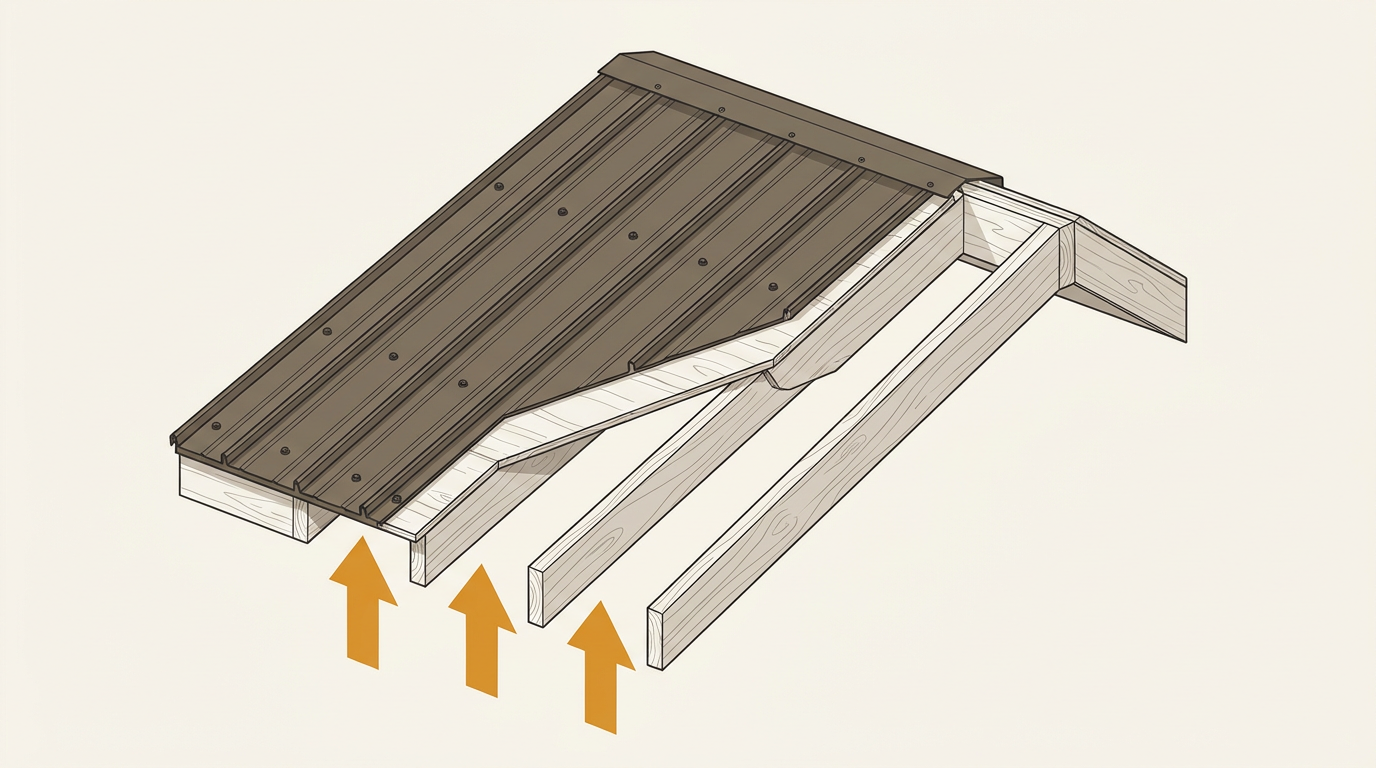
Take SL150 under FL41812.02-R1: a 1.5 in. seam, 24 ga steel at 50 ksi minimum yield, 16 in. maximum coverage, an 18 ga fixed clip 3.5 in. long, two #12 x 1 in. pancake-style fasteners per clip, over a minimum 15/32 in. plywood deck. Move the clips from 24 in. on center to 6 in. and the rated load moves with them, from 86 psf to 116 psf. Swap the deck to OSB and you are outside the approval entirely, because that deck was never tested under it.
The load figures themselves have a specific meaning. On our standing seam panels the published design pressures are allowable loads with a factor of safety of 2.0 already applied. On 5V they are maximum design pressures. Those are two different quantities and restating one as the other is a real error, not a wording preference. The 2:1 margin is not a manufacturer courtesy either: FBC 1523.4 applies a 2:1 margin of safety to wind uplift resistance test results inside the HVHZ, and FBC 1504.9 applies the same margin outside it.
Two things an approval usually does not cover, which contractors routinely assume it does:
- Deck attachment. Real approvals state that the deck and its fastening are a separate design problem, outside the scope of the evaluation. On a re-roof that leaves deck condition and re-nailing squarely yours to solve.
- Fire classification. It is frequently excluded, and said to be excluded in writing. FBC 1505.1 requires testing to ASTM E108 or UL 790, and the 1505.2 exception reaches metal on noncombustible decks or on noncombustible framing without a deck. Over a plywood or OSB deck, the ordinary Florida residential case, you need a tested and listed assembly.
The ERS approval numbers
Every number below was read off the signed Florida Product Approval for that exact panel. The HVHZ column is the compliance statement on the approval, not a marketing position.
| Panel | Florida approval | HVHZ |
|---|---|---|
| SL100, 1 in. snaplock standing seam, 24 ga steel | FL41812.05-R1 | Approved |
| SL150, 1.5 in. snaplock standing seam, 24 ga steel | FL41812.02-R1 | Approved |
| NS150, 1.5 in. nailstrip standing seam, 24 ga steel | FL41812.01-R1 | Approved |
| M100, 1 in. mechanical lock, 0.032 in. aluminum, PVDF only | FL41812.03-R1 | Approved |
| M150, 1.5 in. mechanical lock, 24 ga steel or 0.032 in. aluminum | FL46540.02-R0 steel, FL46540.03-R0 aluminum | Approved |
| PBR, 24 ga steel | FL36968.2 | Approved |
| NS100, 1 in. nailstrip, 24 ga or 26 ga steel | FL41812.04-R1 for 24 ga, FL46540.01-R0 for 26 ga | Not approved |
| PBR, 26 ga steel | FL36968.1, FL24397.6, FL27567.1 | Not approved |
| 5V crimp, 0.032 in. aluminum or 26 ga steel | FL24397.1, FL24397.2, FL24397.3 | Not approved |
| Rib panel, 29 ga steel or 0.032 in. aluminum | FL24397.7 through FL24397.12 | Not approved |
| Titanium PSU30 underlayment | FL11602-R19 | Non-HVHZ |
Note the PBR line carefully. It is the one product in our catalog whose HVHZ answer splits by gauge, and flattening it into a single claim is how a submittal gets rejected. Verify the current revision of any of these at floridabuilding.org before you submit. Revisions change and a product sheet is a snapshot. The full document set lives on our Florida product approval and installation instructions page.
Exactly what you submit inside the HVHZ
Inside Miami-Dade and Broward the submittal is not left to local habit. FBC Section 1525 sets out a Uniform Permit Application, and for a metal roof you complete sections A, B and D and attach items 1 through 7:
- Fire directory listing page
- From the product approval: front page, specific system description, specific system limitations, general limitations, and applicable detail drawings
- Design calculations per Chapter 16, or RAS 127 or RAS 128 where applicable
- Other component of the product approval
- Municipal permit application
- Owners notification for roofing considerations, reroofing only, which is FBC Section 1524
- Any required roof testing or calculation documentation
Section D is the steep sloped roof system page, and it is the one that has to agree with your approval line by line. It asks for the roof system manufacturer, the notice of acceptance number, the minimum design wind pressures for Zone 1, Zone 2 and Zone 3, deck type, underlayment type, insulation, fire barrier, fastener type and spacing, adhesive type, cap sheet type, roof covering, drip edge type and size, roof slope, ridge ventilation, and mean roof height.
Read that list back against the assembly paragraph above and you can see where rejections come from. Section D asks for fastener type and spacing. Your approval publishes a fastener type and spacing for each tested method, each with its own allowable load. When the two documents disagree, the reviewer has a written reason to reject and no discretion to ignore it.
If you are working from an NOA rather than a statewide approval, the NOA carries a jobsite obligation of its own: a copy of the entire NOA has to be provided to the user and be available for inspection at the job site at the building official's request. Print it and keep it in the truck.
Outside the HVHZ there is no statewide checklist
We went looking for one and there is not one to cite. Outside Miami-Dade and Broward, each local building department sets its own submittal requirements. In practice you will nearly always be asked for the product approval documentation and the manufacturer's installation instructions, and often for wind load calculations, but the exact package is a county and city question.
What does not change outside the HVHZ is the underlying obligation. Chapter 16 wind loads still apply, the 2:1 margin under 1504.9 still applies, and the approval still has to cover the assembly you are actually building. What changes is who is checking, and how formally.
How to read an approval in five minutes
- Which code edition was it evaluated against. It should be the 2023, 8th Edition. A superseded edition is a red flag.
- The two HVHZ flags. Approved in the HVHZ, yes or no. Approved outside it, yes or no.
- The tested assembly. Substrate and gauge or alloy, coating, panel width, seam type, minimum slope.
- Deck type and deck attachment, and whether the approval says the deck sits outside its scope, which it usually does.
- The design wind load appendix. This is where the psf figures live, method by method, with the clip or fastener spacing that earns each one.
- Fire classification. Covered, or explicitly not.
- Signed and sealed by a Florida professional engineer, with registration and organization numbers, and a named quality assurance agency.
- The precedence clause. Where the approval, the drawings and the code disagree, the more restrictive and FBC compliant detail governs.
One number you will never find on an approval is a wind speed rating for the panel. "Rated for 180 mph" is not a thing an approval says. Approvals publish design pressures in pounds per square foot for one specific tested assembly. Miles per hour and pounds per square foot are not interchangeable, and a supplier who converts between them casually is telling you something about how carefully they read their own documents.
Where this bites: the county decides the panel
All of the above turns into one practical question at quoting time. Where is the job. In Miami-Dade or Broward the HVHZ flag has already eliminated NS100, 5V, rib panel and the 26 ga PBR before you compare anything else, and no upgrade, sealant or fastener pattern brings them back. In Orlando or Jacksonville the whole catalog is on the table and the wind calculation governs. We work through exactly what changes county by county in HVHZ vs non-HVHZ in Florida.
Product approval is a public, searchable, unusually transparent system, and it is the reason a Florida plan reviewer can hold a supplier to what they claimed. Run your job through Instant Metal Quote for a material list, pull the approval documents from our resources page, and if you want a second set of eyes on a submittal before it reaches the counter, send it to our sales desk.