A standing seam or 5V order does not usually stall on the panels. It stalls on the trim, because trim is the part of the order that gets an afterthought quantity scrawled in the margin instead of a real count. Ridge cap, drip edge, rake, valley, wall flashings, closures, fasteners and sealant all need the same precision as the panels themselves, or the order sits at fabrication while somebody calls to ask what gauge the customer actually wants. This is the checklist we wish every order came in with.
Why trim is what holds an order up
Panels are fabricated to exact length by our Florida fabrication partners, and trim is braked from the same coil run to match. That second half is the part that goes sideways. A panel order with a firm length, gauge and color is easy to run. A trim order that says "ridge cap, some drip edge, and whatever else you need" is not. There is no whatever-else-you-need coil sitting on a shelf. Every piece is braked to order, in the gauge and finish the job calls for. A run that has to stop and ask a question goes to the back of the queue while the answer comes back. We would rather be blunt about it: the fix is not complicated. It is a complete list, with quantities, before the order goes in, on the same order as the panels.
The order-form checklist, ridge to eave
Work the roof from the ridge down and you are less likely to miss a piece. Every item below is measured from the actual roof, not the plan dimension, because a plan length and a field length are rarely the same thing once overhangs, hips and offsets are accounted for.
- Ridge cap - caps the ridge line, vented or unvented depending on the attic ventilation strategy. Measure the full ridge run and add overlap, not the roof's plan-view ridge dimension.
- Drip edge (eave) - sheds water clear of the fascia at the low edge of every slope. This is the piece most often shorted, because it gets priced off the building footprint instead of the actual eave length once overhangs are added in.
- Rake (gable) - closes the panel end and covers the rake edge on a gable roof. The rake length runs longer than the plan length on anything but a straight hip roof.
- Valley and valley cleat - the valley carries concentrated runoff where two slopes meet, and it is the piece most exposed to standing water on a Florida roof during the rainy season. The cleat holds the valley down without an exposed fastener sitting in the water path.
- Endwall and sidewall flashing - a wall crossing the slope needs a headwall (endwall) detail tucked under the panel above it; a wall running parallel to the slope needs the sidewall piece stepped up the wall face. These two get mixed up on a takeoff more than any other pair on this list, and ordering the wrong one means a return trip to fabrication.
- Closures - foam or metal closures fill the panel's rib profile at the ridge, eave and wall conditions so wind-driven rain and pests cannot get up under the panel. Foam and metal closures are not interchangeable across profiles; a closure cut for a 1-inch seam will not seal a 1.5-inch seam.
- Fasteners - panel-specific, including the correct fastener for exposed-fastener profiles like 5V, PBR and rib panel. Concealed-fastener standing seam clips are a separate line item from any exposed screw count and are easy to leave off a trim order entirely.
- Sealants and butyl tape - the compatible sealant and butyl for the panel and trim combination, at laps, terminations and penetrations. The wrong sealant chemistry against a coated panel can do more damage than no sealant at all.
Every one of those pieces is braked to order in every gauge and finish ERS stocks, and profiles shown on the accessories page are schematic - they identify the piece, not the exact dimension. If a job needs a detail that is not a standard piece, send a section drawing rather than describing it over the phone; most trim ships in the same fabrication run as the panels either way.
Why trim has to match panel gauge, finish and color run
Trim ships in the same gauge and finish as the panel it finishes, and that is not a cosmetic preference. A ridge cap braked from a lighter gauge than the panel it caps will oil can, and it reads differently in direct sun at the ridge line. A mismatched finish is worse, because it does not stay put. PVDF trim over an SMP panel run will not weather at the same rate, so the mismatch gets more visible as the roof ages, not less.
On a job where the panel's Florida Product Approval is split by gauge, matching is not a style choice at all. PBR is the clearest example: 24 gauge PBR carries Miami-Dade HVHZ approval under FL36968.2, and 26 gauge PBR does not. Inside Miami-Dade or Broward County the trim gauge has to match the gauge the assembly was approved in. Otherwise the paperwork travelling with the order does not match what the inspector is looking at. Verify the current approval revision at floridabuilding.org before the order goes in, the same way you would for the panel itself.
Color run matters for a related but separate reason. Coil is coated in batches. Two "same color" runs made months apart can read slightly different in direct Florida sun even when both sit inside the coating manufacturer's spec. Ordering panel and trim together is how you guarantee they came off the same run. Ordering trim later as a top-off, once the original panel run is gone, is how a ridge cap ends up not quite matching the field six months on. See the full range of colors and coatings ERS runs before you spec a job, so the trim order matches the panel order from the start.
What to put on the order to avoid a hold
- List every trim piece by name and linear footage, measured from the actual roof, not the plan.
- State the panel profile, gauge and finish for every trim piece, not only for the panels.
- Note any condition, like a dormer or an offset ridge, that needs a piece outside the standard list, and send a section detail instead of describing it verbally.
- Confirm fastener type and count separately from clip count on concealed-fastener panels.
- Confirm sealant and closure type against the panel profile before the order is placed, not after delivery.
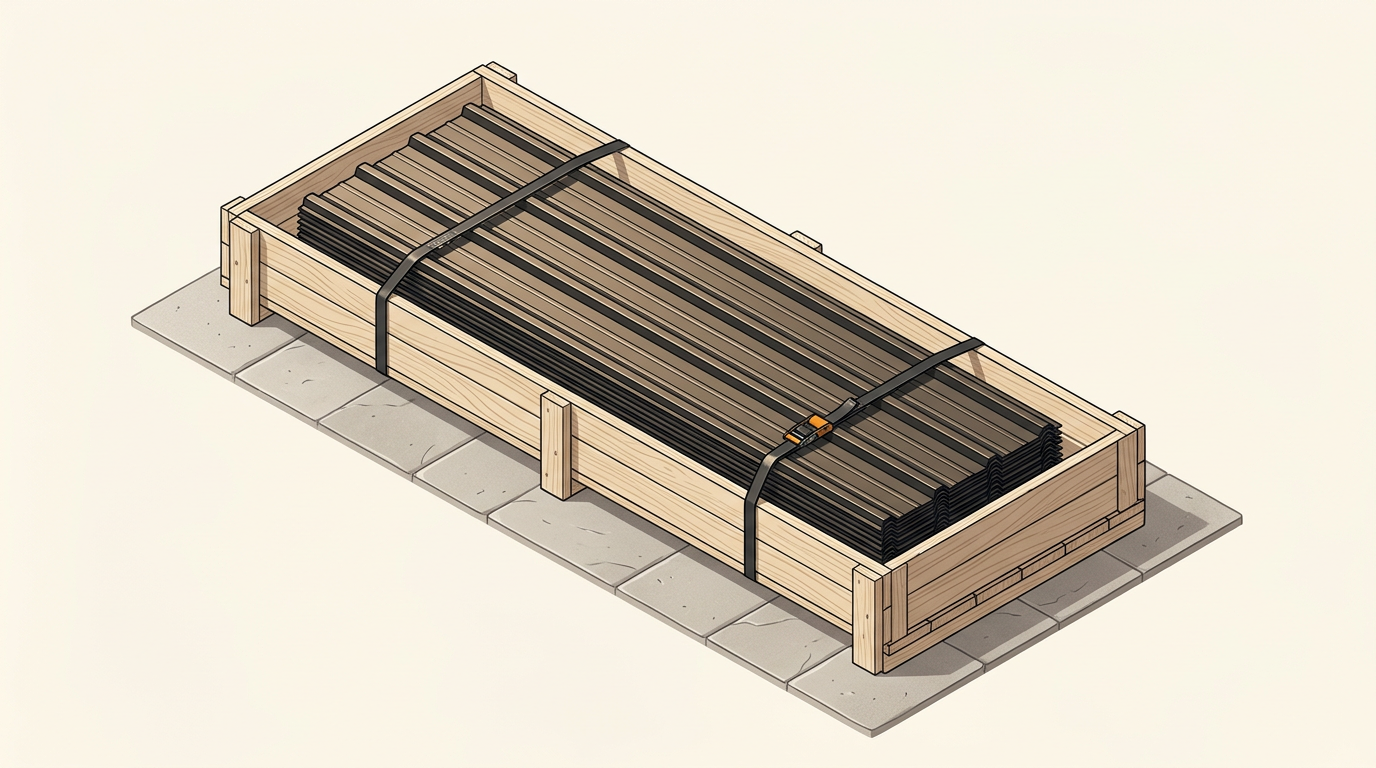
A trim order built this way goes into the same fabrication run as the panels, in the same color run, and ships in the same crate. Panels fabricated to exact length by our Florida fabrication partners eliminate end-laps, reduce waste, and speed installation, and matched trim is how that same discipline carries through to every flashing detail on the roof, not just the field panels. That is the entire point of ordering it this way: one order, one run, one crated delivery, and nothing waiting at fabrication on a phone call.
Where this fits with standing seam and 5V
The checklist above applies whether the job is standing seam or 5V crimp, but the trim list itself differs by profile. A concealed-fastener standing seam roof needs clips as a distinct line item and generally fewer exposed closures. An exposed-fastener 5V, PBR or rib panel roof needs a full fastener count on the order as a first-class item, not an afterthought. Every panel-to-trim connection on those profiles is a visible, weathered fastener for the life of the roof.
Run the trim list through Instant Metal Quote alongside the panel order, or send it to sales directly if the job has details IMQ does not cover. Either way, get the full list in before the order is placed - that single step is what keeps a job moving through fabrication instead of sitting on hold.