When panels are cut to exact length, a bad measurement is not a trim cut. It is a reorder. That is the whole argument for verifying the roof before the order goes to fabrication, and it is why we offer field measurement verification as a service instead of assuming every contractor wants to carry that risk themselves.
This is not a warning about our process. It is the arithmetic of any exact-length program. Metal America says it plainly in its ordering guidance: custom-cut panels are manufactured to your specified dimensions and cannot be returned or exchanged. A panel three inches short at the ridge needs a field fix. A panel three inches long at the eave sits wrong over the gutter. Neither problem existed at the shop. Both of them existed on the tape measure.
What a stock-length job forgives and an exact-length job does not
Buying 20 foot stock panels for a 17 foot 6 inch run means every panel carries two and a half feet of forgiveness. Measure the roof a little long, cut a little more off. That slack is expensive in waste and in labor, but it is real slack, and a lot of contractors have never had to think past it.
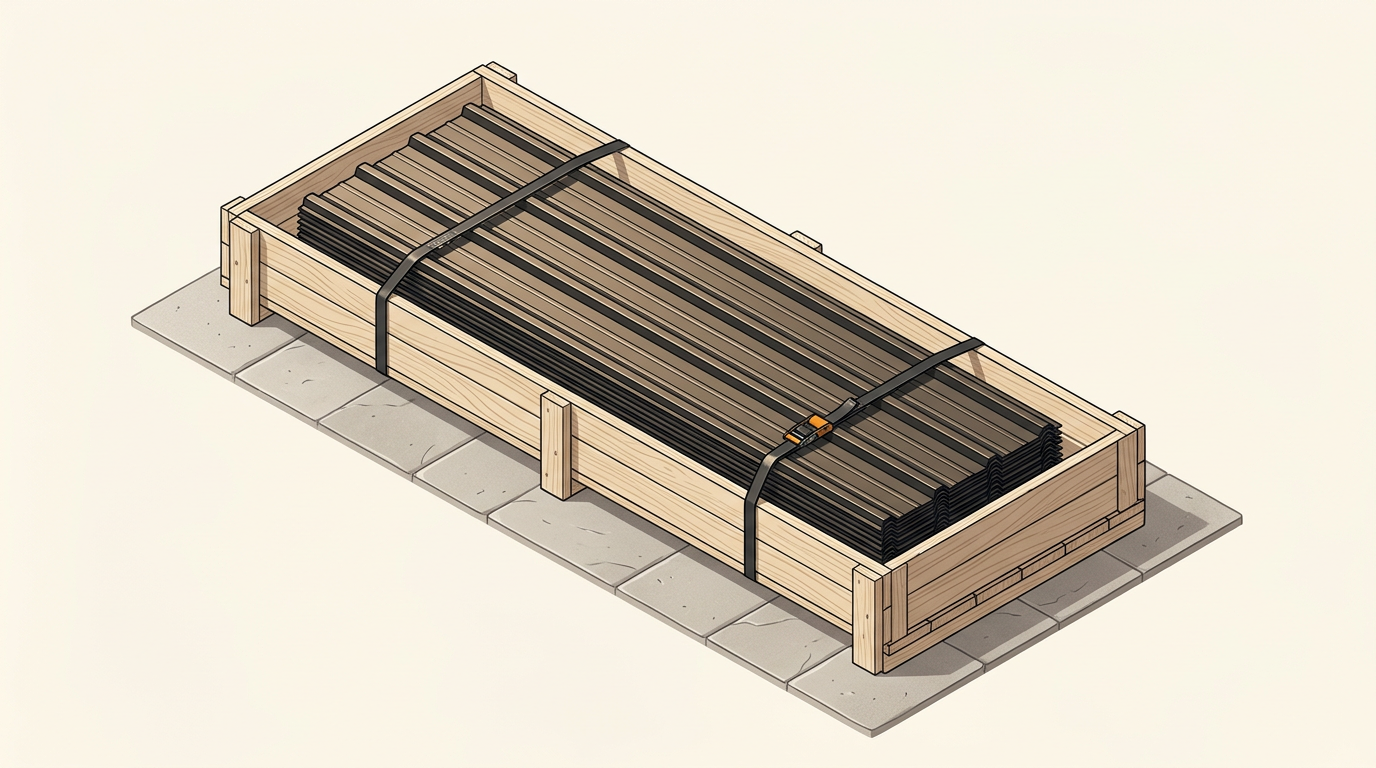
Exact length trades that slack for everything described in our piece on crated delivery and exact-length panels: no end laps, no field cutting, less waste, faster install. The trade is deliberate and it is worth it on almost every job. But it means the measurement is now load bearing. You are not buying material any more. You are buying a specific roof, rendered in steel.
What field measurement verification actually checks
Our technicians go to the property, measure the roof directly, and send back a report you can order from. In plain terms, here is what they are capturing and why each item bites.
- Run length, slope by slope. Not the footprint and not a number off a satellite tool. Eave to ridge on the actual plane, taken on the plane rather than derived from a pitch guess.
- Overhang and hem allowance. The panel is longer than the run. How far it projects past the eave trim and how much metal the hem or cleat detail consumes both go into the cut length. This is the single most common source of a short panel.
- Squareness. Older Florida framing is frequently not square, and a run that is 18 feet 4 inches on the left rake and 18 feet 7 inches on the right rake is a normal finding, not an anomaly. Exact-length fabrication can accommodate that. It cannot accommodate not knowing about it.
- Every plane break. Hips, valleys, dormers, chimney crickets, porch tie-ins and lower roofs each generate their own panel lengths. A hip roof is a set of trapezoids, and the panel schedule is a list, not a number.
- Coverage width and panel count. The number of panels per plane depends on the profile's net coverage, and a partial panel at the last rake has to be planned rather than discovered.
- Trim and flashing runs. Ridge, hip, rake, drip edge, valley, endwall and sidewall lengths, plus penetrations. Trim shortages stop a crew as hard as panel shortages do.
- Deck condition and existing layers. What is under the roof affects fastener selection, underlayment and whether the job is a tear-off. It also affects what the permit application looks like.
- Access and staging. Where a forklift can set a crate, where the panels can be carried, whether a long panel can physically be walked around the house.
That last item is less obvious than the others and it is the one that ruins days. Sheffield Metals publishes a handling table that scales crew size with panel length: three to four people for a 16 to 30 foot panel, four to five for 31 to 45 feet, more above that, spaced along the sheet. A 34 foot panel is not a two-man carry. If the only path to the back slope is a four foot side yard with an air conditioner in it, somebody needs to know that before the crate is quoted, not after it is set.
When it is worth it and when it is not
We are not going to tell you every job needs it. Here is our honest read.
Worth it:
- Any roof with hips, valleys, dormers or more than about three planes
- Any re-roof where the framing predates 1990 and squareness is a real question
- Any job where you did not personally get on the roof
- Commercial and multi-building work where one error repeats across every unit
- Jobs where you are new to the profile and unsure how the eave and ridge details consume metal
- Anything in Miami-Dade or Broward, where the submittal and inspection scrutiny is highest and a remake pushes you back into the schedule
Probably not worth it:
- A simple gable, two planes, that your own crew measured on the deck last week
- A repeat building type you have already built and ordered several times
- New construction where you have current, verified as-built dimensions rather than design drawings
The design drawing caveat matters more than it sounds. Plans show intent. Roofs show what got framed. On a re-roof there are no plans at all, only a roof.
How verification interacts with fabrication and delivery timing
The sequence is straightforward: quote, verify, confirm, fabricate, crate, deliver. Verification sits before the order confirmation because that is the last moment changing a number is free.
Verification does add a step to the front of the schedule, and we would rather say that than pretend it is free. What it removes is a much worse step at the back. A remake does not just cost the panels. It costs the crew day you already booked, the crane or the lift if you rented one, and the position in the fabrication queue you already had. The delivery date on your order confirmation is the date we commit to, and a reorder resets it.
Delivery itself works the way it always does: Northeast Florida on our own trucks, everywhere else in Florida as crated freight with a delivery date quoted on the order. Details are on crated delivery.
What to have ready before the technician arrives
- The panel decision. Profile, gauge, substrate and finish. Coverage width differs by profile, so the panel count depends on it. If you are still deciding, the standing seam range and 5V crimp pages lay out the options.
- The county. Miami-Dade and Broward are the High Velocity Hurricane Zone, and the panel list narrows there. It is worth resolving before measurement rather than after, because a profile change can change coverage width and therefore panel count.
- Access arrangements. Gate codes, dogs, HOA rules, whether anyone needs to be home.
- Known conditions. Soft decking, prior repairs, added structures, anything the owner has already told you about.
- Your trim intent. How you plan to detail the eave and the ridge changes the cut length. If you have a preference, say it up front.
- The existing IMQ quote, if you have one. Building the job in Instant Metal Quote first gives the technician a structure to verify against instead of a blank page.
The Florida specifics that catch people
Roof geometry in this state runs complicated. The Mediterranean and Spanish revival stock through Central and South Florida is hip-heavy with multiple ridge heights. Coastal cottage stock in St. Augustine and Fernandina Beach has additions on additions, and the plane you are looking at from the driveway is often two planes. Low-slope porch and lanai tie-ins are everywhere, and they change both the panel length and, sometimes, whether the profile is appropriate at that slope at all.
Then there is the paperwork angle. The Florida product approval for a panel covers an assembly, and what you install has to match what you submitted. A field change made to solve a measurement problem, a lap added on a slope where the approval does not contemplate one, is not just a workmanship issue. It is an inspection issue. Getting the measurement right the first time is partly a compliance decision.
The honest summary
Exact-length fabrication is the right default and we are not walking it back. It removes end laps, removes field cutting, cuts waste and speeds the install. It concentrates the risk into one place: the tape measure. Field measurement verification exists so that a contractor who does not want to carry that risk personally does not have to.
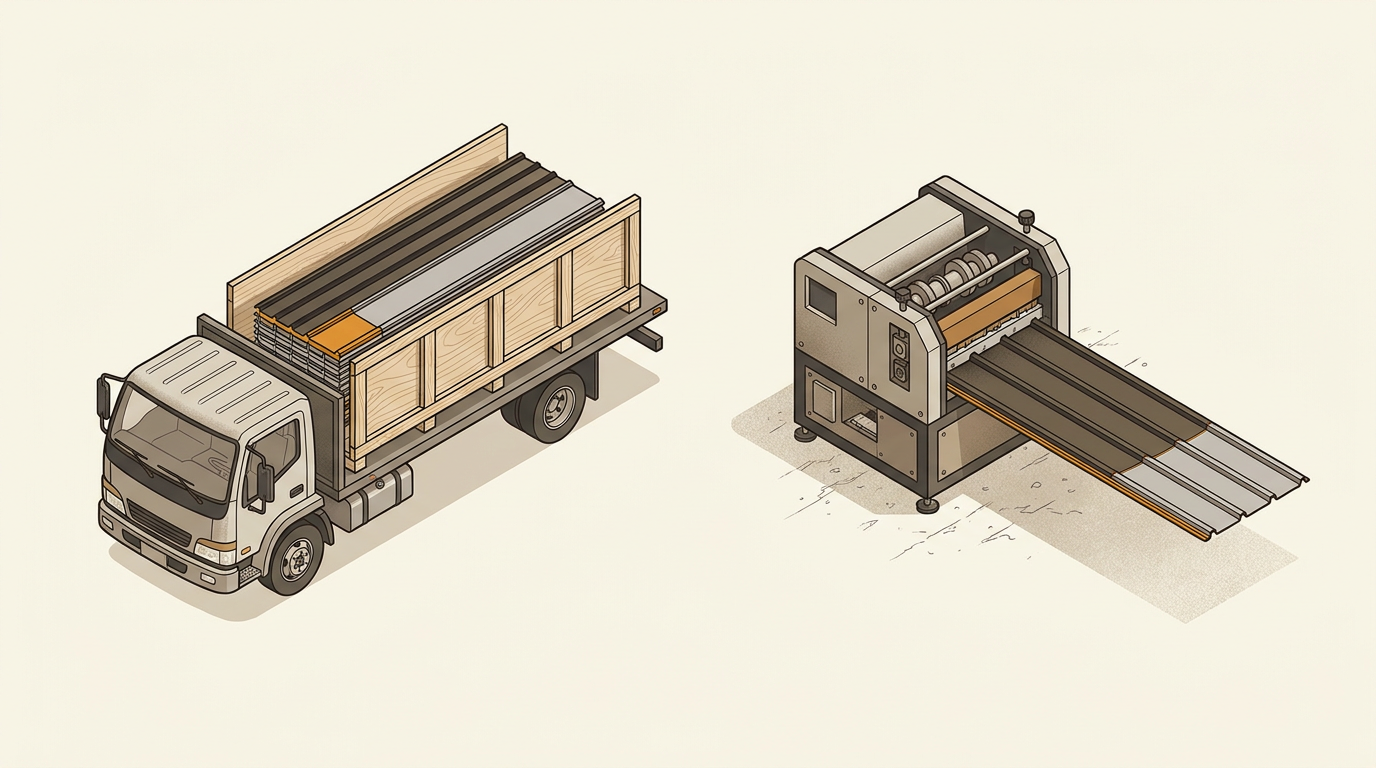
For jobs where the geometry justifies it, that is a good trade. For a simple gable you measured yourself, it may not be, and we will tell you so. If you want a comparison of exact-length fabrication against the alternative, we lay it out in crated panels versus onsite roll forming.
Next step
Build the job in Instant Metal Quote to get a material list, then add field measurement verification if the roof warrants it. If you would rather walk through a specific job first, contact sales or book a consultation.